Posts

Showing posts with the label Lean

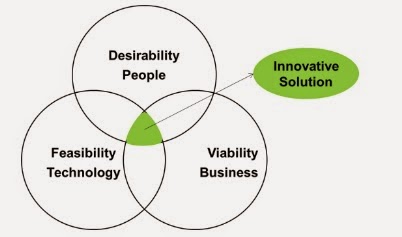
Design thinking- desirability-feasibility-viability

Image
http://scn.sap.com/community/design-thinking/blog/2013/05/10/design-thinking--so-what http://forty.co/value-balancing-desirability-feasibility-viability

Lean Principle applied in Agile

- Programmers write more automated testes and focus on higher automated testing  - Manual testers are more focused on exploratory testing  - Documentation of BRS, FRS, Test Plans are totally reduced to a simple list of features with scenarios; i.e. BDD. This provides a common language that business users, programmers, testers can all understand share and collaborate on.  - Development Team is structured that programmer and testing skills are in the team.Instead team members pair up to both do development and testing in a highly iterative and incremental nature.  - Culturally the team succeeds when the work is done and meets the quality standards defined by the "Definition of Done". If something is wrong, all fail.  - Defects found in Sprint are actually not logged, but the developer / tester pair simply chat and fix it on the spot as the work to the Product Owner is not "Done" yet.  - Missing requirements are not bugs, but simply new requireme...

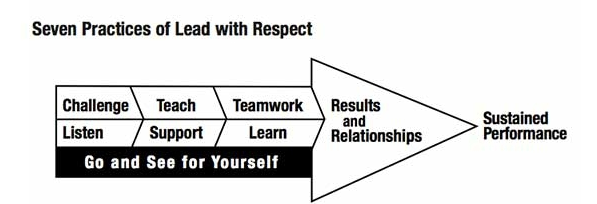
7 Steps for Leading Lean with Respect for People

Image
source- http://www.industryweek.com/lean-six-sigma/7-steps-leading-lean-respect-people 

Scrum Master- A Facilitator

WHAT ARE FACILITATION SKILLS? One of the most important sets of skills for leaders are facilitation skills. These are the "process" skills we use to guide and direct key parts of our organizing work with groups of people such as meetings, planning sessions, and training of our members and leaders. Facilitation has three basic principles: A facilitator is a guide to help people move through a process together, not the seat of wisdom and knowledge. That means a facilitator isn't there to give opinions, but to draw out opinions and ideas of the group members. Facilitation focuses on  how  people participate in the process of learning or planning, not just on  what gets achieved A facilitator is neutral and never takes sides facilitating actually means: Understanding the goals of the meeting and the organization Keeping the group on the agenda and moving forward Involving everyone in the meeting, including drawing out the quiet participants and controll...

Lean- introduction

Lean manufacturing started with Henry Ford, who not only concentrated on material flow by linking manufacturing operations, but understood that, "Having a stock of raw materials or finished goods in excess of re­quirements is waste." He prevented the storage of ma­terial in any stage of completion by not having a single warehouse. After World War II, Taiichi Ohno and asso­ciates, including Shigeo Shingo, built on Henry Ford's ideas and developed the Toyota Production System, described as "a reasonable method of making products since it completely eliminates unnecessary elements in production for the purpose of cost reduction. The basic idea in such a production system is to produce the kind of units needed, at the time needed, and in the quanti­ties needed." Toyota focused on reducing cost, and on developing continuous flow for low-volume production. Lean manufacturing puts an increased emphasis on adding value. In a mature, lean manufacturing environ­ment, pro...

Wastes in Software Development

Waste is simply anything that does not add real value to the overall end goal is considered waste. Things that could be considered waste are  - Unnecessary features or functionality  - Over engineering  - Unnecessary code  - Weak requirements  - Bureaucracy  - Anything that slows down or delays the team  - Weak testing, resulting in many production issues  - Poor or unnecessary communication  - Unnecessary documentation (note documentation may still be needed)  - Anything that wastes time without any valuable benefit   "The Seven Wastes of Software Development":  1. Partially Done Work  2. Extra Features  3. Relearning  4. Handoffs  5. Delays  6. Task Switching  7. Defects

World of Agile methods

List of Topics on which I specialize and would like to talk in my future posts..... Agile Modelling Agile Unified Process (AUP) Crystal Clear / Methods Dynamic Systems Development Method (DSDM) Extreme Programming (XP) Feature Driven Development (FDD) Graphical System Design (GSD) Kanban Lean Software Development Scrum Velocity Tracking Software Development Rhythms

Best scrum tool in the market

Whiteboards and stickies. Start with the basics and get the teams involved before you invest in tools. At this point, tools are detrimental. Learn the game before investing.  Some things you should think about:  1. Who's your audience?  2. What value are you capturing?  3. What type of measurements do you want visible?  4. Who will actually be using the tool?  Keep retrospecting with the team over a few months while working the stickies and the whiteboards and the team will define the requirements. Compare this will the foreseen business value from your stakeholders and you should be able to drive a decision.  Lastly, don't buy something that has too many gadgets; that defeats the simplicity of agile.  

7 Key Principle of Lean Software Development

1. Eliminate Waste 2. Build Quality In 3. Create Knowledge 4. Defer Commitment 5. Deliver Fast 6. Respect People 7. Optimise The Whole In the future posts we will discuss the above mentioned principles.